

A rug is often the last thing added to a bedroom and the first thing that makes it feel finished. Placed well, it anchors the bed, defines the sleeping zone, adds warmth underfoot, and ties the room’s colours and textures together into a cohesive whole.
Placed poorly, even the most beautiful rug will make the room feel disjointed, the furniture look like it is floating, and the space seem smaller or more chaotic than it is.
The good news is that bedroom rug placement follows a clear set of principles. Once you understand them, the decisions become straightforward. This guide covers every placement method, how to size correctly for each bed type, which shapes and materials work best in bedrooms, how to layer rugs effectively, and the mistakes that make even expensive rugs look wrong.
Why Placement Matters More Than the Rug You Choose
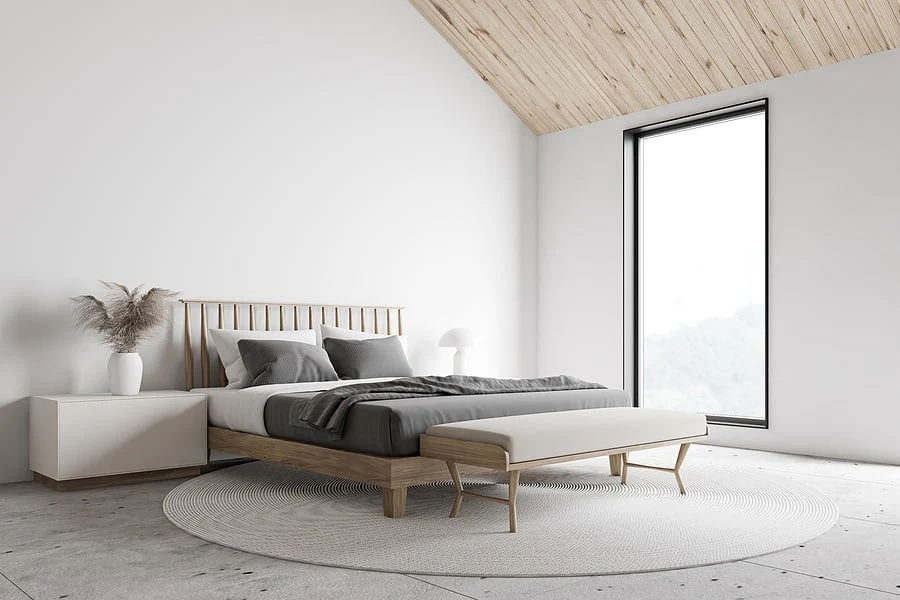
Most people spend the majority of their rug budget on finding the right colour, pattern, or material, then place it wherever seems convenient. This is the wrong order of priorities. A well-placed modest rug will elevate a bedroom more reliably than an expensive rug placed without intention.
The reason is proportion and grounding. When a rug is correctly sized and positioned relative to the bed, it creates a visual foundation that makes the entire room feel deliberate and considered.
When it is undersized or positioned too far from the furniture it is meant to anchor, the eye registers the disconnection even if the person cannot articulate why the room feels off.
Before choosing any rug, decide where it will go and what size it needs to be. Then choose the rug that works within those parameters.
Rug Size Guide by Bed Type
Size is the single most important decision in bedroom rug placement. A rug that is too small is the most common mistake in bedroom decorating. The table below shows the recommended rug sizes for each bed type across the three main placement methods.
| Bed Size | Full Under-Bed Coverage | Partial (2/3) Coverage | Runners Each Side |
| Single / Twin | 150×210 cm (5×7 ft) | 120×180 cm (4×6 ft) | 60×150 cm (2×5 ft) each |
| Full / Double | 200×290 cm (8×10 ft) | 150×210 cm (5×7 ft) | 60×180 cm (2×6 ft) each |
| Queen | 230×300 cm (9×12 ft) | 200×290 cm (8×10 ft) | 80×210 cm (2.5×7 ft) each |
| King | 270×360 cm (9×12 ft+) | 230×300 cm (9×12 ft) | 80×240 cm (2.5×8 ft) each |
As a general rule, the rug should extend at least 45 to 60 cm (18 to 24 inches) beyond the sides and foot of the bed. This ensures your feet land on soft flooring when you step out of bed, which is both the primary comfort function and the key visual indicator that the rug is the right size for the space.
The Main Bedroom Rug Placement Methods
Method 1: Full Under-Bed Placement
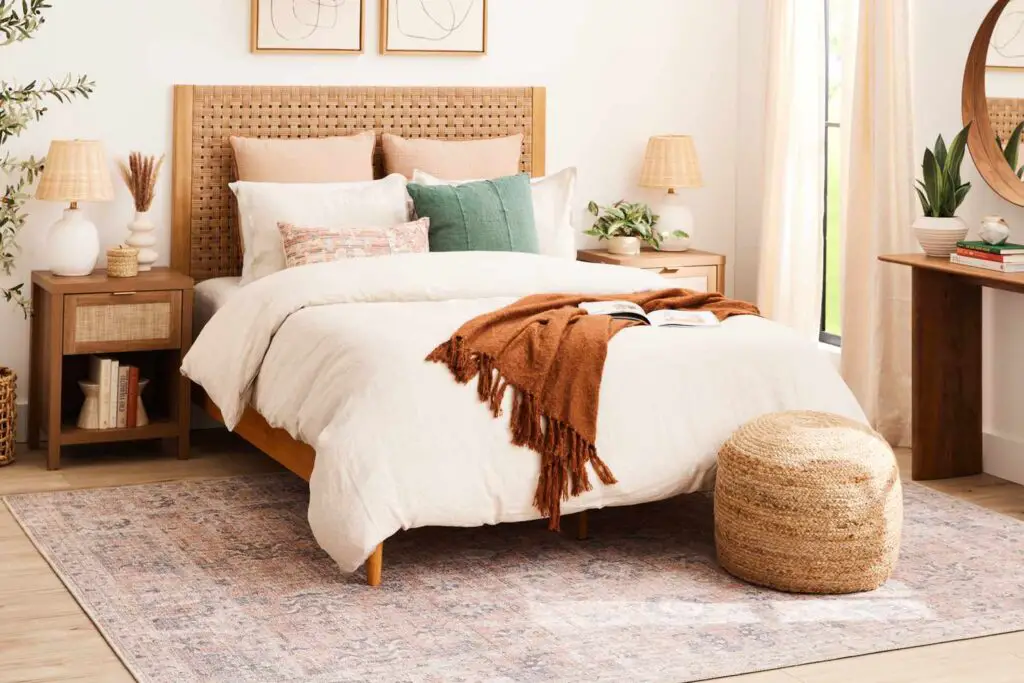
The most visually cohesive option. A large rug is placed beneath the entire bed, extending beyond it on all three open sides. The bed, nightstands, and any bench at the foot all sit on the rug, creating a unified sleeping zone that reads as a room within a room.
This is the placement most associated with a luxurious, hotel-style aesthetic. It works best in medium to large bedrooms where the generous rug size does not consume all visible floor space.
In a small room, a rug large enough for this method may cover so much of the floor that it reads more like carpet than a considered design choice.
- Best for: Master bedrooms, larger rooms, anyone wanting a cohesive, anchored look.
- Key tip: At minimum, all four legs of the nightstands should sit on the rug. If the nightstands fall off the edge, the rug is too small for this method.
Method 2: Partial Under-Bed Placement (The Two-Thirds Rule)
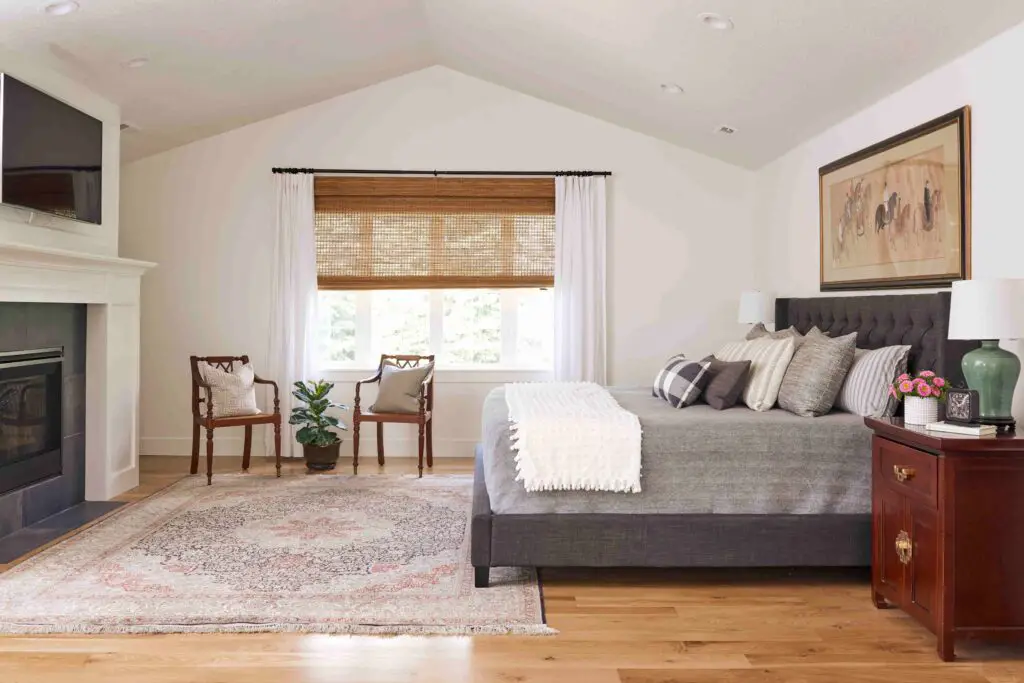
The most practical and widely used placement. The rug extends beneath the lower two-thirds of the bed, from roughly the midpoint to well past the foot, leaving the headboard end of the bed on bare floor. The visible portion of the rug extends 45 to 60 cm (18 to 24 inches) on both sides and at the foot.
This method requires a smaller rug than full coverage, making it more budget-friendly while still achieving the grounded, anchored look that makes a bedroom feel complete.
It also works well in rooms where the bed is pushed against a wall on one side, as the visible extension on the open side and foot of the bed does most of the visual work.
- Best for: Most bedrooms. The most reliable and versatile placement method.
- Key tip: The rug should never end at the foot of the bed. It must extend clearly beyond the footboard so that stepping out of bed always means stepping onto the rug.
Related Topic:
Method 3: Runners on Each Side
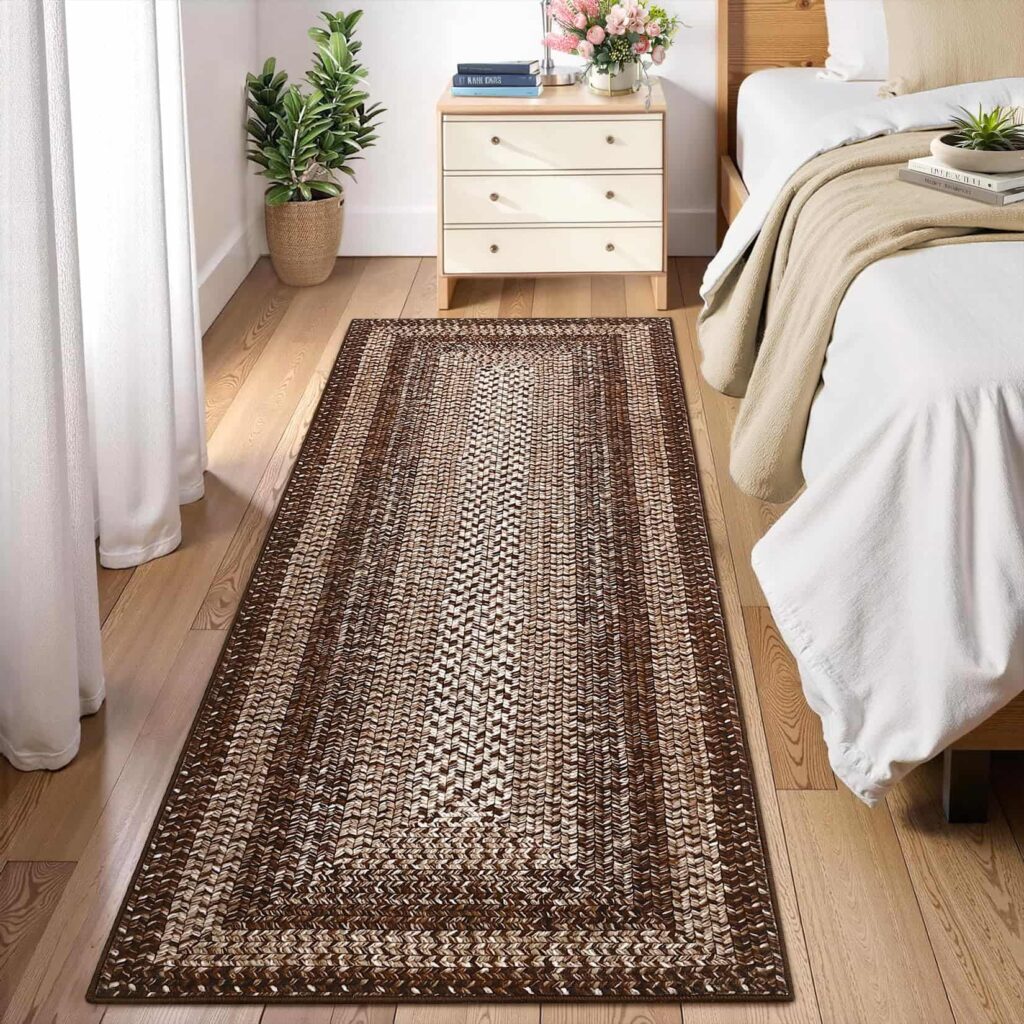
Two matching runners are placed along the open sides of the bed, running parallel from the headboard to past the footboard. This provides soft flooring exactly where you need it: the step-off zone beside the bed. The foot of the bed is left uncovered, or a small accent rug can be added there separately.
This method is particularly effective in narrow bedrooms where the open floor space beside the bed is limited, making a large area rug feel overwhelming. It is also a practical solution in rooms with attractive hardwood, stone, or tile flooring that you want to keep visible.
The symmetry of matching runners on both sides creates a clean, architectural aesthetic.
- Best for: Narrow rooms, minimalist interiors, rooms with beautiful flooring worth showing.
- Key tip: Runners should be wide enough to extend slightly beyond the nightstand on each side and long enough to reach just past the foot of the bed. Too narrow or too short and the effect reads as accidental rather than intentional.
Method 4: Foot of the Bed Placement
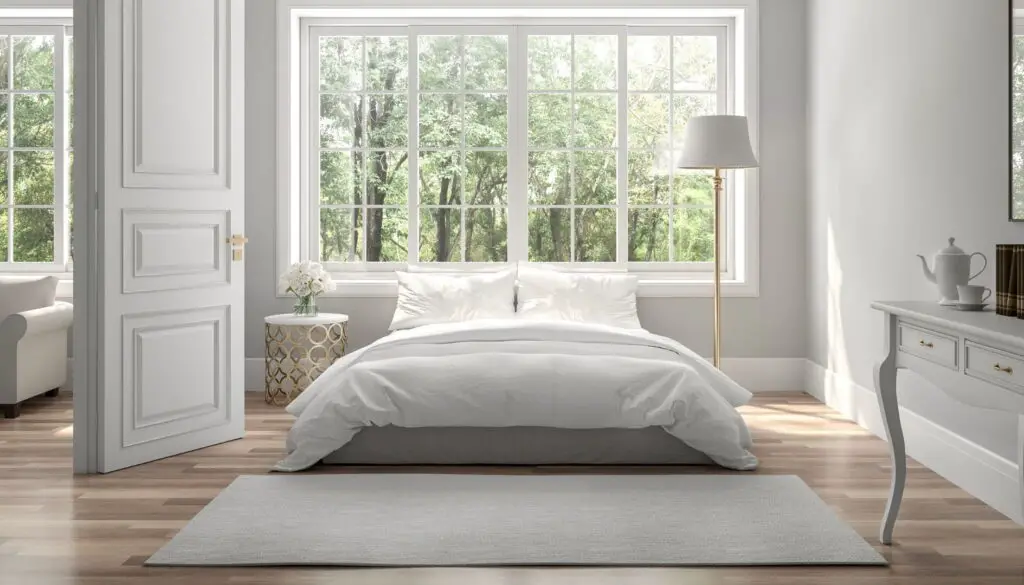
A single rug is placed horizontally across the foot of the bed, covering the area in front of the footboard. This is more of an accent placement than a primary one, and works best as a complement to a room that already has carpet or a polished floor with visual interest. On its own in a large room, a foot-of-bed rug can look isolated and insufficient.
This placement works particularly well when a bench or ottoman sits at the foot of the bed, with the rug tucked beneath it to anchor that piece of furniture. A 90×150 cm (3×5 ft) to 120×180 cm (4×6 ft) rug is typically the right size for this position.
- Best for: Rooms with carpet, rooms with a bench or ottoman at the foot of the bed, accent placement in larger rooms.
Rug Shape Guide for Bedrooms
- Rectangular: The most versatile and forgiving shape for bedrooms. Works with all placement methods and aligns naturally with the geometry of the bed and room walls. The right choice for most bedrooms.
- Round: Soft, welcoming, and excellent at counterbalancing sharp furniture angles. A round rug works beautifully in the partial under-bed placement, with the curved edge extending from beneath the bed into the open room. Also works well in secondary seating zones within larger bedrooms. Choose a diameter at least equal to the width of the bed for proportional balance.
- Runner: Ideal for the side-placement method and for narrow spaces. Also works well layered over a larger base rug in the open floor zone beside the bed.
- Square: Less common in bedrooms but works well beneath a king or super king bed where the bed’s generous proportions match the equal dimensions of the rug. Ensure the square is large enough to extend clearly on all sides.
Best Rug Materials for Bedrooms
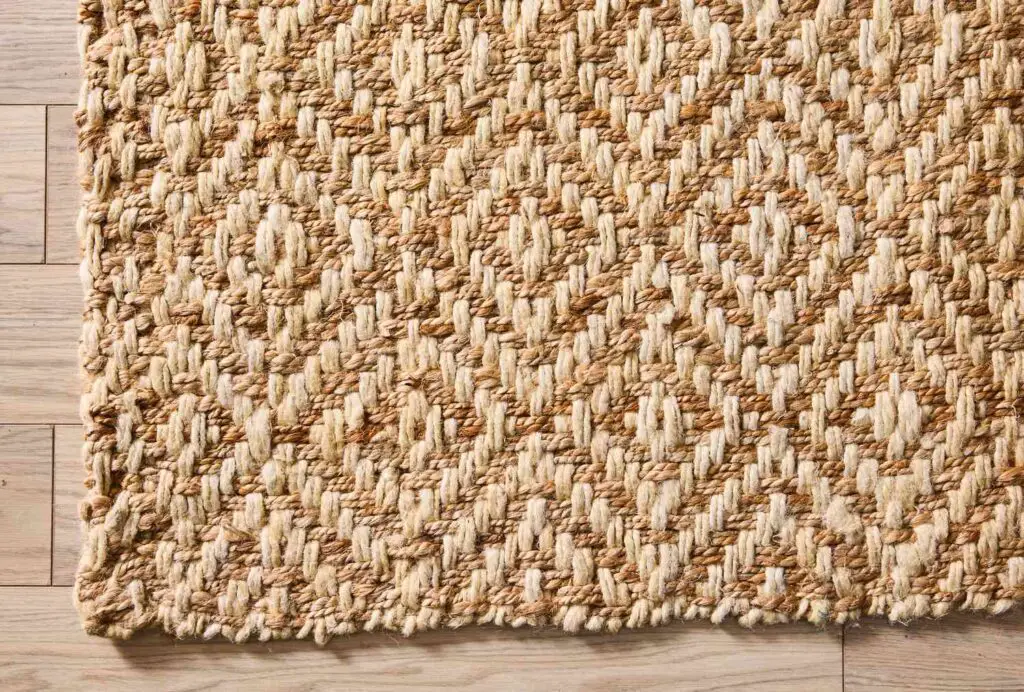
The bedroom demands different qualities from a rug than a living room or kitchen. Softness, warmth, and quiet are the priorities rather than durability and easy cleaning.
- Wool: The best all-round choice for bedrooms. Naturally soft, warm, resilient, and sound-absorbing. Wool pile rugs maintain their appearance well and feel genuinely luxurious underfoot. The premium price reflects genuine long-term value.
- Cotton: Lightweight, washable, and affordable. Cotton rugs are a practical choice for bedrooms where easy maintenance is important, particularly in children’s rooms. Less luxurious than wool but far more manageable.
- Viscose and silk-blend: Beautifully lustrous and visually striking. Best suited to low-traffic master bedrooms where the rug is more of a design statement than a workhorse. These materials show footprints and flatten under heavy furniture more readily than wool.
- Jute and natural fibre: Excellent as a base layer in a layered rug arrangement. On their own, natural fibre rugs can feel rough underfoot in a bedroom context. Pair with a softer top rug or choose softer jute-cotton blends.
- Synthetic (polypropylene, polyester): The most budget-friendly option with good stain resistance. Modern synthetic rugs have improved significantly in softness and appearance. A practical choice for children’s bedrooms or rental properties.
Rug Placement Beyond the Bed: Secondary Zones
In larger bedrooms, a rug does not have to serve only the sleeping area. Secondary zones within the bedroom benefit from their own rug placement to define and anchor them separately from the bed.
- Reading or seating nook: A chair and side table in a corner benefit from a small rug placed beneath them, with the front legs of the chair on the rug. A round rug works particularly well in a seating nook, creating a distinct circular zone that contrasts with the rectangular geometry of the sleeping area.
- Dressing area: A small rug in front of a wardrobe or dressing table provides a soft standing surface and defines the dressing zone visually. A runner works well in long wardrobe areas.
- Bedroom entry: A small rug at the bedroom doorway marks the transition from corridor to personal space. This placement is especially effective in open-plan bedrooms or suites where a clear visual boundary between zones is beneficial.
Related Topics:
How to Layer Rugs in a Bedroom
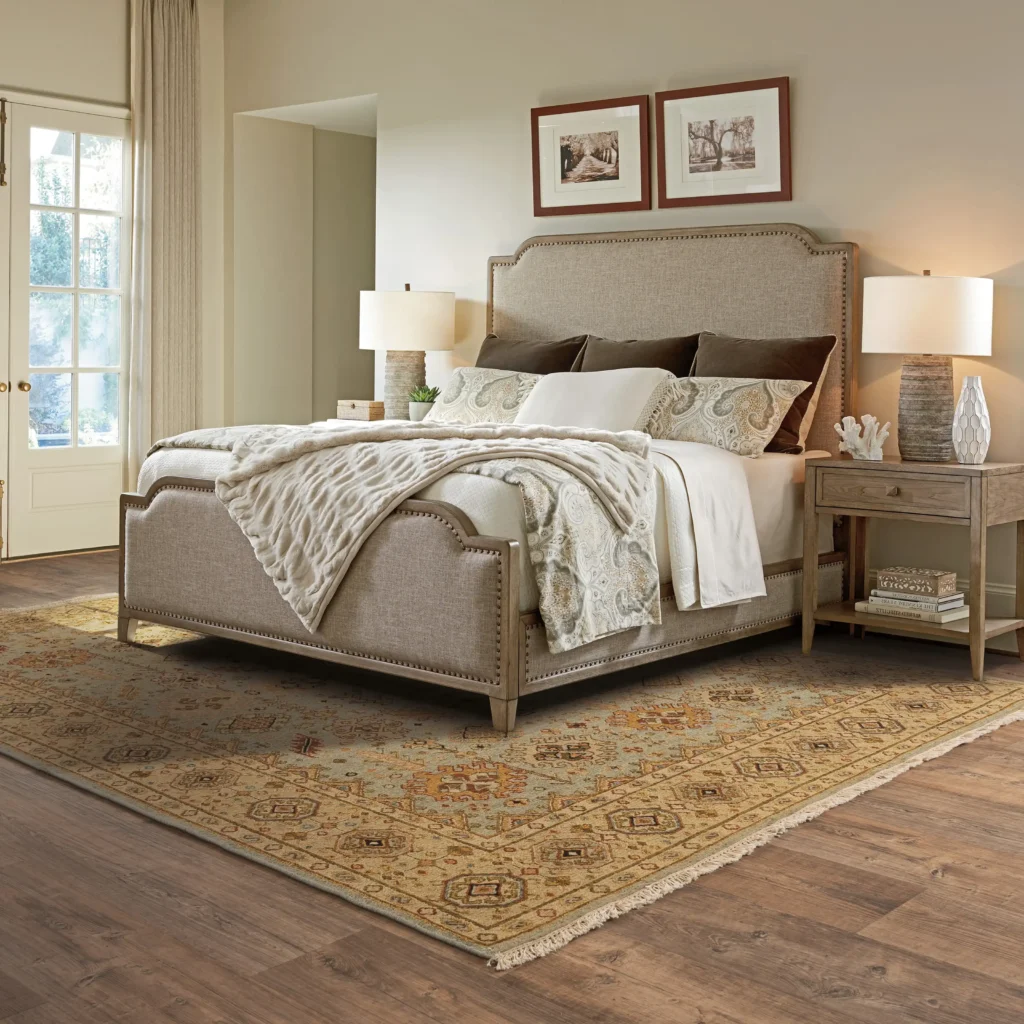
Layering two rugs creates visual depth, texture, and the collected, personalised aesthetic that is central to many contemporary and eclectic interior styles. It is also a practical way to use a smaller statement rug without the commitment of sizing it to the whole bed.
- Base layer: A large, flat-weave or natural fibre rug in a neutral tone. Jute, sisal, or a plain cotton flatweave works well. The base should be large enough to extend clearly beyond the foot and sides of the bed.
- Top layer: A smaller, more decorative rug placed on top, positioned where you step out of bed or in the centre of the open floor zone. The top rug should contrast in texture: plush over flat, patterned over plain, or colourful over neutral.
- Proportion rule: The top rug should be noticeably smaller than the base. A common pairing is a 200×290 cm (8×10 ft) base with a 150×210 cm (5×7 ft) or 120×180 cm (4×6 ft) top layer.
Rug Pads: The Most Overlooked Essential
A rug pad is placed between the rug and the floor and serves three functions: it prevents the rug from slipping, adds cushioning that makes the rug feel thicker and softer underfoot, and protects both the rug backing and the floor surface from abrasion. Yet most guides on bedroom rug placement never mention it.
- On hard floors: A non-slip rug pad is essential. Without one, even a heavy rug will migrate gradually with foot traffic, catching toes and disrupting the placement you worked hard to establish.
- On carpet: Use a carpet-to-carpet rug pad with a grippy texture on both sides to prevent the rug from sliding on the carpet surface.
- Sizing: Choose a rug pad 3 to 5 cm (1 to 2 inches) smaller than the rug on each side. A pad that matches the rug exactly will show at the edges; one that is too small will not prevent movement at the rug’s perimeter.
6 Common Bedroom Rug Placement Mistakes
- Choosing a rug that is too small: The single most common and most damaging mistake. A small rug beneath a large bed looks like a bathmat. When in doubt, size up. A rug that is slightly too large is far easier to live with than one that is too small.
- Centring the rug in the room rather than aligning it to the bed: The rug’s job in a bedroom is to anchor the bed, not to sit in the middle of the floor’s geometry. In most rooms these are different things. Always align to the bed first.
- Stopping the rug at the foot of the bed: The rug must extend clearly beyond the footboard so that stepping out of bed always lands on soft flooring. A rug that ends flush with the footboard misses the entire practical point of a bedroom rug.
- Using a light rug in a high-traffic bedroom: Very pale or white rugs show every footprint, pet hair strand, and piece of dirt. If you love light tones, choose a mid-tone warm neutral rather than a very pale option, or select a high-grade stain-treated material.
- Forgetting the rug pad: A rug without a pad will shift with regular use, trip people, and wear unevenly at the edges. Always use a non-slip pad sized slightly smaller than the rug.
- Placing the rug at an angle without clear intention: A diagonal rug placement can look dynamic and considered in the right room. Without strong design intention and sufficient size, it reads as a mistake. If you are new to rug placement, start with aligned placement and build from there.
Related Topic:
FAQs
Should a bedroom rug go under the bed or in front of it?
For most bedrooms, a rug that extends beneath the lower two-thirds of the bed is the most practical and visually effective choice. This ensures the visible portion of the rug creates a soft landing zone beside and in front of the bed while anchoring the furniture arrangement. A rug placed only in front of the bed without extending under it can look disconnected from the sleeping area unless the room has carpet and the rug is serving purely as an accent.
What size rug do I need for a queen bed?
For a queen bed with full coverage, a 230×300 cm (9×12 ft) rug is the standard recommendation. For the more common partial coverage placement, a 200×290 cm (8×10 ft) rug works well, extending approximately 45 to 60 cm (18 to 24 inches) beyond the foot and open sides of the bed. In a smaller room, a 150×210 cm (6×9 ft) rug can work with the two-thirds placement but should be considered the minimum acceptable size.
Can a round rug work in a bedroom?
Yes, round rugs work very well in bedrooms. They are particularly effective in the partial under-bed placement, where the curved edge extending from beneath the foot of the bed into the open room creates a soft, welcoming focal point. Round rugs are also excellent in secondary seating zones or reading nooks within larger bedrooms. Ensure the diameter is at least equal to the width of the bed to maintain proportional balance.
Final Thoughts
Getting bedroom rug placement right comes down to three decisions: choosing the correct size for your bed and placement method, aligning the rug to anchor the bed rather than the room’s centre, and ensuring the rug extends clearly beyond the footboard so stepping out of bed always means stepping onto something soft.
Everything else, including colour, pattern, material, and texture, should follow those decisions rather than drive them. Make the structural choices first, and the stylistic ones become both easier and more likely to succeed.
1 thought on “Bedroom Rug Placement Ideas: Size, Position, Shape and Style”