
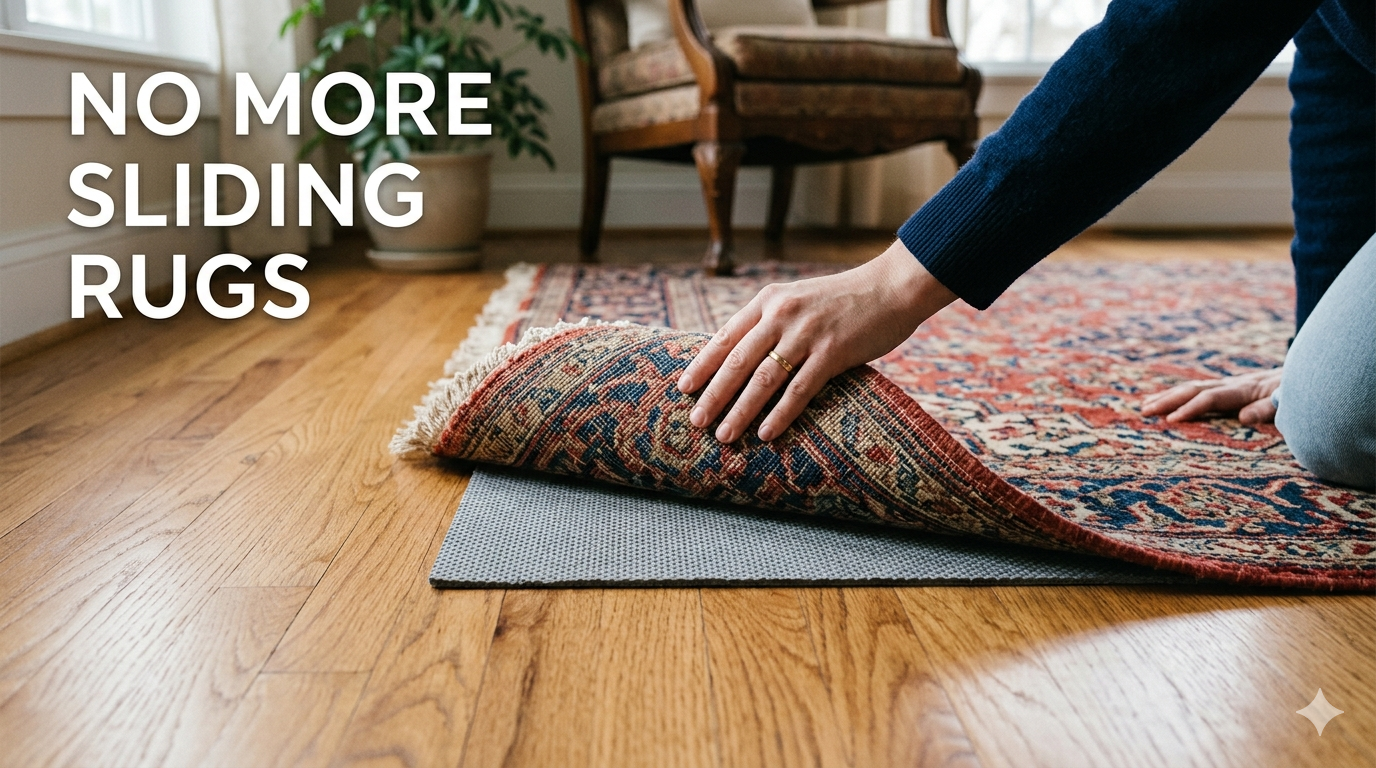
There are few household annoyances more persistent or more dangerous than a sliding rug. One moment it’s perfectly centered under your coffee table, and the next it has migrated three feet across your beautiful hardwood floor.
If you’ve been searching for how to stop a rug from sliding on a wood floor, you’re not alone. This is one of the most common home décor problems homeowners and renters face, and the good news is that it’s entirely solvable.
Beyond the frustration of constantly readjusting your rugs, sliding rugs on hardwood floors are a genuine safety hazard. According to the National Floor Safety Institute, slips and falls account for over one million emergency room visits every year in the United States, with loose rugs and floor coverings being a leading cause. Whether you have young children running through the hallway or elderly family members navigating your living room, a slipping rug is a risk you simply cannot ignore.
In this comprehensive guide, we’ll walk you through every effective method for how to stop a rug from sliding on a wood floor from budget-friendly DIY fixes to premium long-term solutions. We’ll also cover what to watch out for so you protect your flooring in the process.
By the time you’re done reading, you’ll have all the knowledge you need to keep your rugs firmly in place, your floors looking flawless, and your home safer for everyone in it.
Why Rugs Slide on Wood Floors (And Why It Matters)
The Science Behind the Slip
Understanding why rugs slide is the first step toward stopping them. Wood floors whether hardwood, engineered wood, laminate, or bamboo have smooth, low-friction surfaces. Unlike carpet, which grips rug backings naturally, polished wood offers almost nothing for a rug to hold onto. Add foot traffic, pet activity, or furniture movement, and the rug slowly shifts with every passing day.
The backing material of the rug plays a big role too. Rugs with synthetic or tightly woven backing tend to slide more freely on slick surfaces. Natural fiber rugs like jute or sisal are slightly grippier but can still creep over time without support. The weight and size of the rug also matter lighter, smaller rugs are far more prone to sliding than large, heavy area rugs.
The Damage You Might Not Notice
Here’s something most people don’t consider: while you’re trying to figure out how to stop a rug from sliding on a wood floor, the rug may already be damaging the floor underneath. Certain rubber rug pads and rug backings can react chemically with the finish on hardwood floors, leaving permanent yellow stains, discoloration, or dull patches.
This is especially common with budget rubber backings and older polyurethane floor finishes. Knowing this helps you choose the right solution that protects both your safety and your investment.
10 Proven Methods to Stop a Rug from Sliding on a Wood Floor
1. Use a High-Quality Rug Pad
This is the gold standard solution, and for good reason. A quality rug pad sits between your rug and the wood floor, creating friction on both sides that effectively locks the rug in place. It’s the single most recommended method by interior designers and flooring professionals alike.
When shopping for rug pads, look for products made from natural rubber or a felt-and-rubber combination. Natural rubber grips the floor without the chemical compounds found in cheaper synthetic versions.
Felt-and-rubber pads offer an added cushion underfoot while still providing excellent grip a popular choice for living rooms and bedrooms where comfort matters.
The pad should be cut to about one to two inches smaller than your rug on each side. This prevents the pad from being visible around the edges while ensuring full coverage underneath. Many retailers sell rug pads by the roll so you can cut them to the exact size you need.
2. Choose a Rug Pad Designed for Hardwood Floors Specifically
Not all rug pads are created equal, and this distinction is critical. Standard rug pads particularly those made with recycled rubber or PVC can off-gas chemicals that react with hardwood floor finishes over time. Always look for rug pads that are explicitly labeled as safe for hardwood or wood floors.
The best materials for wood floors are:
- Natural rubber: Grips well, floor-safe, durable, and eco-friendly.
- Felt: Ultra-soft, protects the floor from scratching, but needs a rubber layer for grip.
- Felt + Natural Rubber Combination: The best of both worlds for hardwood floors.
Avoid pads made with synthetic rubber, latex, or PVC if you have finished hardwood, as these are the most likely to stain or dull your floor’s finish over the years.
3. Apply Double-Sided Rug Tape
For a quick, low-cost fix, double-sided rug tape is a fantastic option especially for smaller rugs, runner rugs in hallways, or any situation where a full rug pad feels like overkill. Rug tape works by adhering to both the underside of the rug and the surface of the floor, essentially gluing the rug in place without causing any damage (when using a floor-safe version).
To apply it correctly, clean your wood floor thoroughly first so the tape sticks properly. Apply strips along all four edges of the rug’s underside, as well as diagonally across the middle for extra hold. Press the rug firmly into place, smooth it out, and the tape does the rest.
One important caveat: use only rug tape that is marketed as safe for hardwood or sealed wood floors. Some tapes leave adhesive residue or can pull up the floor’s finish when removed. Look for products labeled “residue-free” or “removable adhesive” for worry-free use.
Related Topics:
4. Try Rug Grip Strips or Non-Slip Corners
If you’d prefer not to cover the entire underside of the rug, non-slip grip strips or corner grippers are a more targeted approach. These are small pads or adhesive strips that you apply to the corners and edges of the rug the points most likely to curl, lift, or slide.
This method is particularly effective for lightweight rugs that tend to bunch up at the corners rather than slide in a single direction. Corner grippers are also a popular choice in rental homes where you want to avoid any adhesives touching the floor directly.
Some grip strips use a silicone-based non-slip surface rather than adhesive, which means they’re removable, reusable, and entirely safe for hardwood and laminate floors.
5. Add Weight with Furniture
One of the simplest and most cost-free methods is strategic furniture placement. A sofa, armchair, bookshelf, or coffee table sitting on top of the rug effectively anchors it in place. The weight of the furniture prevents the rug from migrating, even under heavy foot traffic.
This works best with large area rugs in living rooms or dining rooms, where furniture is naturally placed on or around the rug anyway. For dining room rugs, position the table so that all four legs rest on the rug this distributes weight evenly and keeps the rug stable even when chairs are pulled in and out.
The limitation here is obvious: furniture anchoring doesn’t work well for runner rugs in hallways, small accent rugs, or any rug that isn’t naturally surrounded by heavy pieces.
6. Use a Silicone Caulk Method (DIY)
If you want a truly budget-friendly DIY fix for how to stop a rug from sliding on a wood floor, the silicone caulk method is surprisingly effective.
Purchase a tube of clear silicone caulk from your local hardware store and apply thin lines or dots across the underside of your rug in a grid pattern. Let it dry completely (usually 24 hours) before placing the rug back on the floor.
The dried silicone creates a grippy, rubber-like texture that significantly increases friction between the rug and the floor. It’s flexible, durable, and won’t crack or crumble over time. Best of all, silicone is generally safe for hardwood floors and won’t leave staining residue.
This is a great approach for rugs with a flat, smooth backing where a rug pad won’t adhere well. It’s also virtually free if you already have silicone caulk around the house.
7. Consider a Rug with a Non-Slip Backing
If you’re shopping for a new rug, choosing one with a built-in non-slip backing is one of the easiest ways to prevent sliding from the start. Many modern area rugs come with latex, rubber, or woven non-slip backings specifically designed for hardwood and smooth flooring.
That said, exercise caution here. Built-in rubber or latex backings are sometimes the cheapest grade of material and may damage your floor’s finish over months or years.
If you go this route, periodically lift the rug and inspect the floor beneath it for any discoloration. When in doubt, still use a thin felt pad between the rug and the floor for an extra layer of protection.
Related Topics:
8. Anchor Runner Rugs with a Stair Runner Rod or Clip System
Hallway runners are notorious for sliding, curling, and bunching because they’re long, lightweight, and subject to constant foot traffic moving in a single direction. For runner rugs specifically, stair runner rods or clip-style anchoring systems can be a game-changer.
Carpet rods (thin decorative metal bars) can be used along the length of a runner rug, pressing it flat against the floor at regular intervals. Alternatively, runner clips attach to the sides of the rug and anchor it to a rug pad below. Both systems keep the runner flat, wrinkle-free, and safely in place and they add a polished, intentional look to your hallway.
9. Damp Mop the Floor Before Laying the Rug
This is a simple but often overlooked trick. Before laying your rug, clean the hardwood floor with a slightly damp mop and let it dry completely. Dust, debris, and floor wax build-up create a super-slick surface that makes even gripped rugs slide more easily.
A clean floor dramatically improves the effectiveness of any rug pad or grip tape you use.
Additionally, if your floor is freshly polished or waxed, wait 24–48 hours before placing a rug on top. Freshly applied wax or polish dramatically reduces surface friction, and placing a rug on it immediately will cause it to slide more than usual until the product has fully cured.
10. Layer Rugs with a Flat-Weave Rug on the Bottom
If you love layering rugs as a design trend, here’s a functional tip: use a flat-weave, low-pile rug as your base layer. Flat-weave rugs like kilims and dhurries have a texture that grips hardwood better than smooth backing alone. Placing a textured top rug over a flat-weave base rug creates two layers of friction the flat-weave grips the floor, and the top rug grips the flat-weave.
This method is particularly effective in boho, eclectic, or layered interior design styles. It’s stylish and functional at the same time, doubling your grip while adding visual depth to the room.
How to Protect Your Wood Floors While Keeping Rugs in Place
Inspect Underneath Regularly
Even with the best rug pad or tape in place, it pays to lift your rug periodically — every three to six months — and inspect the floor beneath it. Look for any discoloration, dullness, or sticky residue. Catching a problem early means you can swap out your rug pad for a safer material before the damage becomes permanent.
Keep the Area Clean and Dry
Moisture is an enemy of both wood floors and rug adhesion. If moisture gets trapped beneath a rug — from spills, humidity, or wet pet paws — it can warp the wood and create mold. Always clean up spills immediately and ensure your home’s humidity levels stay in the 30–50% range. A dry, clean floor holds rug pads and tape far more effectively than a damp or dirty one.
Rotate Your Rug Seasonally
Rotating your rug 180 degrees every few months does two things: it evens out wear and fading from sunlight, and it prevents the rug from developing a directional “drift” caused by consistent foot traffic patterns. This simple habit, combined with a quality rug pad, keeps your rug looking fresh and staying in place much longer.
Which Solution Is Right for You?
Choosing the right method for how to stop a rug from sliding on a wood floor depends on your specific situation:
- Budget-conscious? Try the silicone caulk method or double-sided rug tape.
- Long-term investment? Go with a quality felt-and-natural-rubber rug pad.
- Renter avoiding adhesives? Use non-slip corner grippers or silicone grip strips.
- Hallway runner problems? Consider clip anchors or runner rods combined with a thin rubber pad.
- Large living room rug? Anchor it with furniture and a full-size rug pad for maximum stability.
In most cases, a high-quality rug pad remains the most effective, safest, and most durable solution for hardwood floors. It’s worth the investment once rather than repeatedly fighting with your rug.
Conclusion
A sliding rug is more than an annoyance it’s a safety hazard and a potential threat to your beautiful wood floors. Fortunately, knowing how to stop a rug from sliding on a wood floor doesn’t require expensive professional help or complicated tools.
From premium natural rubber rug pads to simple DIY silicone tricks, there’s a solution for every rug type, floor type, and budget. Choose the right method for your situation, protect your floors during the process, and enjoy a home that’s safer, tidier, and a whole lot less frustrating. Your rug and your family will thank you.
FAQs
Q1: What is the best type of rug pad to use on hardwood floors?
The best rug pad for hardwood floors is one made from natural rubber or a combination of felt and natural rubber. Natural rubber grips the floor effectively without the chemical compounds found in synthetic rubber or PVC pads, which can stain or dull your floor’s finish over time. Felt-and-rubber combination pads are especially popular because they add cushioning underfoot while still providing excellent non-slip performance. Always check that the pad is explicitly labeled as safe for hardwood or finished wood floors before purchasing.
Q2: Will rug tape damage my hardwood floor?
Most rug tapes, when used as directed on finished hardwood floors, will not cause damage but the key is choosing the right product. Look for rug tape labeled “residue-free,” “removable,” or “safe for hardwood floors.” Avoid generic double-sided tape from office supply stores, as these are not designed for flooring and can leave adhesive residue or even pull up the floor’s finish when removed. Always test a small, inconspicuous area first if you’re unsure.
Q3: How do I stop a thin or lightweight rug from sliding on a wood floor?
Lightweight rugs are especially prone to sliding because they have less mass to anchor them in place. The most effective combination for thin rugs is double-sided rug tape along all four edges plus a thin non-slip rug pad underneath. You can also try the silicone caulk method on the rug’s backing, which creates a DIY non-slip surface. For very small rugs, non-slip corner grippers placed under each corner are often enough to keep the rug stable under normal use.