

Placing a rug in a bedroom where the bed sits in the corner is one of the most misunderstood challenges in interior decorating. Most online advice either skips corner bed layouts entirely or offers a single vague tip. The reality is that a corner bed placement creates a unique set of design problems and once you understand why, the solutions become clear.
This guide covers everything: the five specific rug placement methods that work for corner beds, how to size the rug correctly for each bed type, which shapes work best, how to handle both small and large rooms, and the mistakes that make corner bedroom rugs look wrong even when everything else in the room is right.
Why a Corner Bed Makes Rug Placement More Challenging
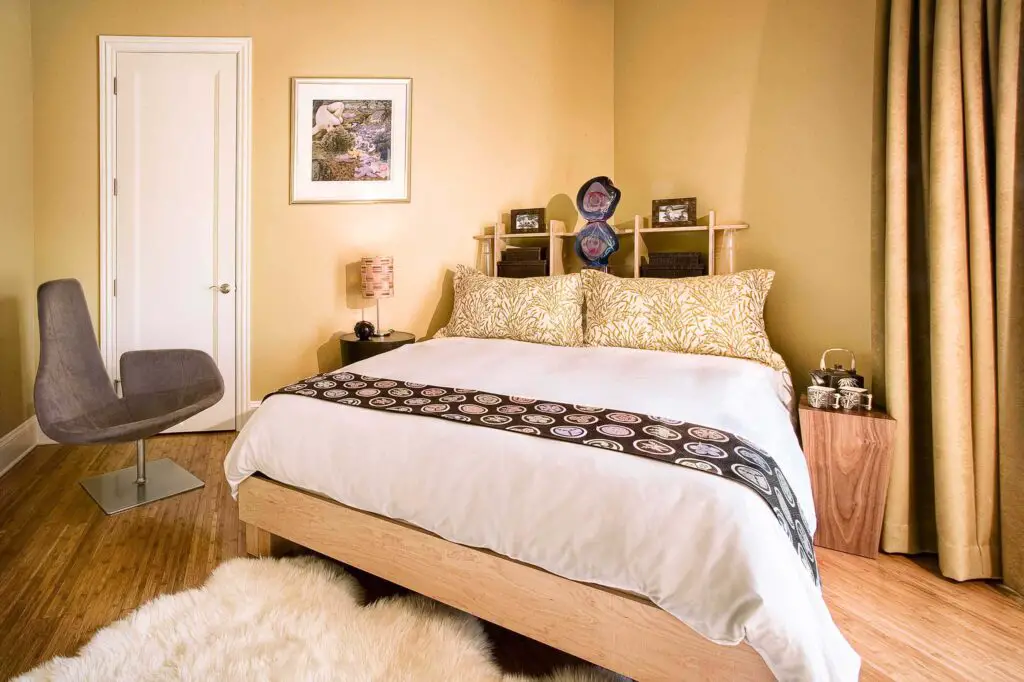
In a standard bedroom layout, the bed sits against the centre of one wall with open floor space on three sides two side aisles and the foot of the bed. A rug can be centred symmetrically beneath it, extending evenly on all three open sides. The geometry is straightforward.
A corner bed breaks this symmetry entirely. Two sides of the bed are against walls, leaving only one side aisle (the long open side) and the foot of the bed as accessible floor space. This creates three specific challenges that most articles never address:
- The floating rug problem: A rug placed in the centre of the room sits too far from the bed, making both the bed and the rug look disconnected like two unrelated objects sharing a room.
- The narrow room problem: A rug placed parallel to the wall the bed is against running lengthwise in the same direction visually compresses the room, making it feel narrow and cramped.
- The asymmetry problem: A rug positioned asymmetrically, with one corner tucked under the bed and the rest floating in open floor space, looks accidental rather than intentional.
Understanding these three failure modes is the key to choosing a placement that looks deliberate and anchored. Each of the five placement methods below solves one or more of these problems.
The 5 Rug Placement Methods for a Corner Bed
Method 1: Perpendicular Placement (The Expert Recommendation)

This is the placement most consistently recommended by interior designers for corner beds and the one most people would not immediately think of. Place the rug so it runs perpendicular to the corner wall that the headboard is against, extending outward from the open long side of the bed.
In practical terms: if your bed is pushed into the top-left corner of the room with the headboard against the top wall, the rug should run left-to-right (perpendicular to that top wall), with the rug’s edge sitting beneath or flush with the open long side of the bed, and the bulk of the rug extending into the open floor space in front of the bed.
- Why it works: It opens the room visually, making it feel wider rather than narrow. The rug anchors the bed from its open side and creates a soft landing zone where you actually step out of bed.
- Best rug size: Large enough to extend at least 45–60 cm (18–24 inches) beyond the foot of the bed and along the full open side. For a queen or double, a 160×230 cm (6×8 ft) or 200×290 cm (8×10 ft) rug works well. For a king, go to 230×300 cm (9×12 ft) or larger.
Best for: Rooms of any size. The most universally successful approach for corner beds.
Method 2: Large Centred Rug Beneath the Entire Bed
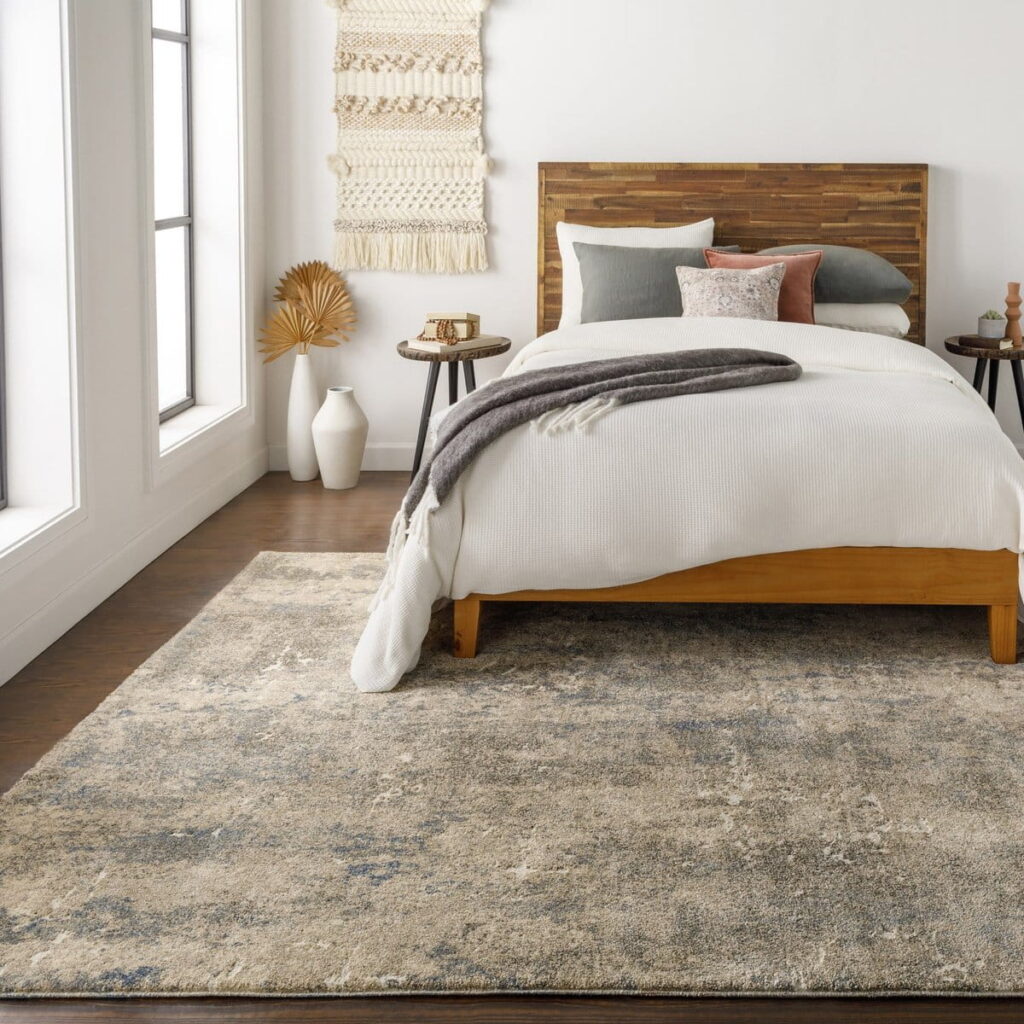
For rooms with generous floor space, a large area rug placed beneath the entire bed including the corner portion creates a unified, grounded look.
The rug extends beneath both the bed and the nightstand on the open side, with visible rug extending along the full open long side and at the foot of the bed.
The key to making this work is size. The rug must be genuinely large at minimum, 200×290 cm (8×10 ft) for a queen or double, and 270×360 cm (9×12 ft) or 300×400 cm (10×14 ft) for a king. An undersized rug in this placement will look worse than no rug at all.
- Why it works: Creates a luxury, cohesive look that makes the corner placement feel intentional and grounded rather than like a compromise. The rug defines the entire sleeping zone as a distinct area within the room.
- Best for: Larger bedrooms with at least 3–4 feet of open floor space beyond the foot and open side of the bed. Not suitable for very small rooms where the rug would nearly fill the entire visible floor area.
- Avoid: Using this method with an undersized rug. If you cannot afford a rug large enough to extend at least 40 cm (16 inches) beyond the open sides of the bed, choose a different method.
Related Topics:
Method 3: Rug Adjacent to the Open Side Only
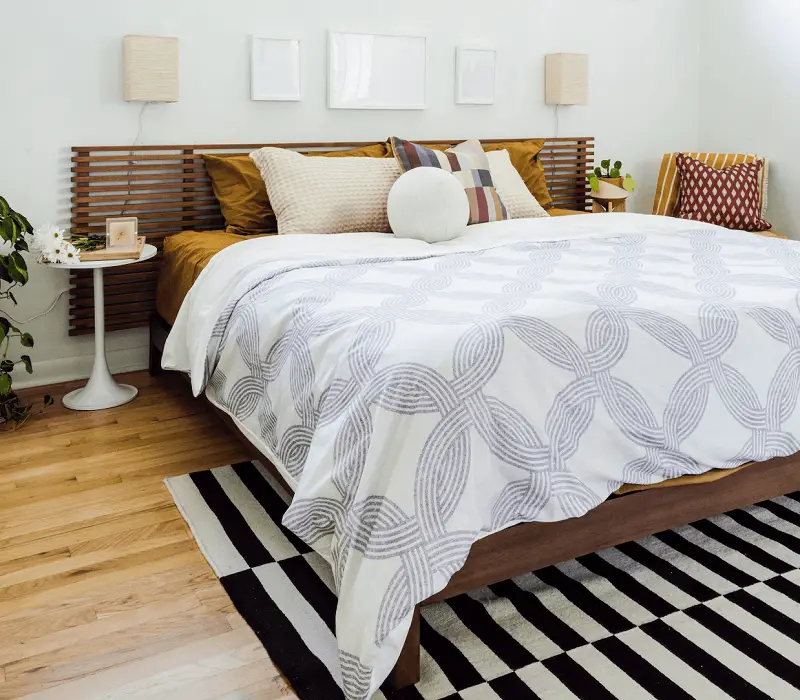
Rather than attempting to place the rug beneath the bed, this method places a medium-sized rug entirely on the open floor alongside the bed flush against the open long side, covering the area where you walk, dress, and move around in the room.
The rug does not go under the bed at all. Instead, it defines the open zone of the room the area between the bed and the opposite wall as a distinct, furnished space. The bed’s corner placement becomes a deliberate design choice rather than a limitation.
- Why it works: Makes the room feel wider by filling the open floor space with visual weight. Works particularly well in small rooms where a large under-bed rug would feel overwhelming.
- Best rug size: 150×210 cm (5×7 ft) to 200×290 cm (8×10 ft) depending on room size. The rug should run the full length of the open side of the bed for best proportions.
- Best for: Small to medium rooms, rental spaces where moving furniture is impractical, and rooms where the floor material (hardwood, tile) is attractive enough to leave partially visible.
Method 4: Diagonal Placement
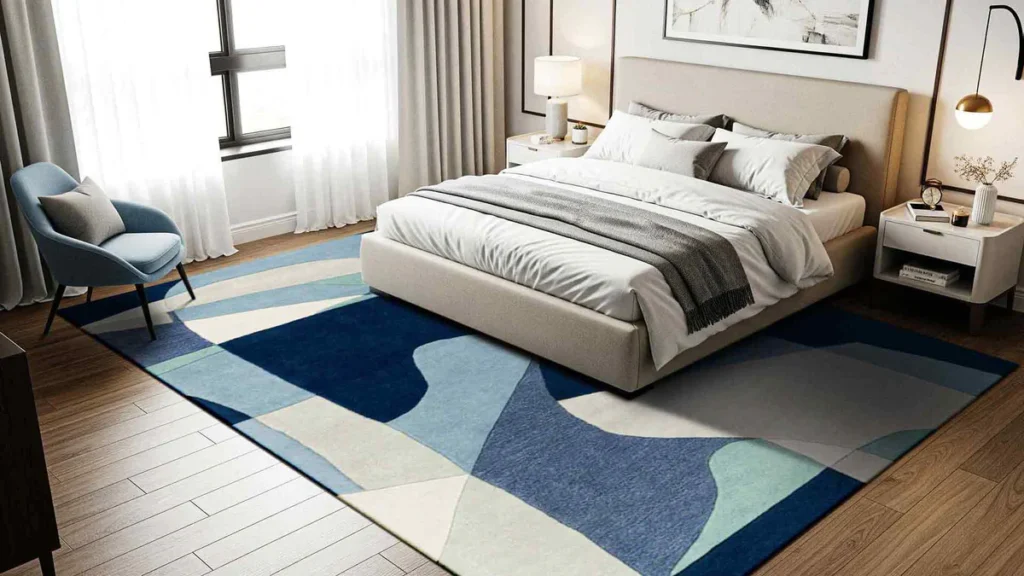
Placing a rug at an angle beneath the corner of the bed is a design-forward approach that adds movement and visual interest to the room.
The rug is positioned diagonally so that one corner of the rug aligns with the corner of the bed, with the rug extending outward toward the centre of the open room at an angle.
This method works best in larger rooms with a strong design identity bohemian, eclectic, or maximalist interiors where the unconventional angle reads as stylistic intention rather than error.
In a minimal or contemporary room, diagonal placement can look unresolved unless the room’s other design elements reinforce the dynamic quality.
- Why it works: Breaks the predictable right-angle geometry of the corner bed, introduces movement, and makes the room feel more dynamic and personalised.
- Best rug size: The rug needs to be generously sized for diagonal placement at least 200×290 cm (8×10 ft) so that the diagonal extension still reaches well into the open room space.
- Best for: Larger rooms with eclectic or maximalist interiors. Less suitable for small rooms or minimalist/contemporary aesthetics.
Method 5: Runners or Multiple Small Rugs
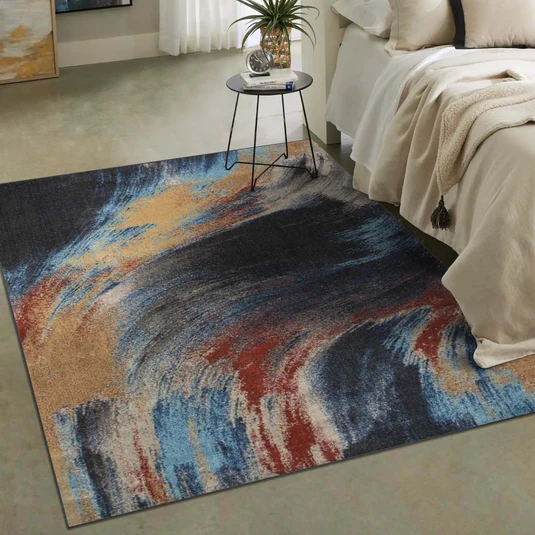
For rooms where a large rug is impractical or budget is a constraint, a runner or a pair of smaller rugs can solve the corner bed placement problem effectively.
A single runner is placed alongside the open long side of the bed running parallel to it from the headboard wall to past the footboard. A second smaller rug can optionally be placed at the foot of the bed.
This method also works beautifully as a layering opportunity: a runner over a larger flat-weave or jute rug creates visual depth and the layered, collected look that is central to many contemporary interior styles.
- Why it works: Provides practical softness exactly where you need it the step-off area beside the bed without requiring a large rug investment. Easy to source, easy to replace, and versatile for rental homes.
- Best rug size: Runner: 60×180 cm (2×6 ft) to 80×250 cm (2.5×8 ft). Place flush against the bed’s open side, not floating in the middle of the floor.
Best for: Small rooms, budget-conscious decorating, rental homes, and layered styling approaches.
Rug Size Guide for Corner Bed Placement
Choosing the right rug size for a corner bed depends on both the bed size and the placement method you choose. Use this table as your starting reference point.
| Bed Size | Method 1 (Perpendicular) | Method 2 (Centred) | Method 3 (Adjacent) | Method 5 (Runner) |
| Single/Twin | 120×180 cm (4×6 ft) | 150×210 cm (5×7 ft) | 120×180 cm (4×6 ft) | 60×150 cm (2×5 ft) |
| Full/Double | 160×230 cm (6×8 ft) | 200×290 cm (8×10 ft) | 150×210 cm (5×7 ft) | 60×180 cm (2×6 ft) |
| Queen | 200×290 cm (8×10 ft) | 230×300 cm (9×12 ft) | 200×290 cm (8×10 ft) | 80×240 cm (2.5×8 ft) |
| King | 230×300 cm (9×12 ft) | 270×360 cm+ (9×12 ft+) | 230×300 cm (9×12 ft) | 80×250 cm (2.5×8 ft) |
These are starting recommendations always measure your specific room before purchasing. The golden rule for any corner bed placement: when in doubt, go larger. An oversized rug looks intentional and luxurious; an undersized one looks like a mistake.
Related Topics:
Best Rug Shapes for Corner Bed Bedrooms
Rectangular Rugs
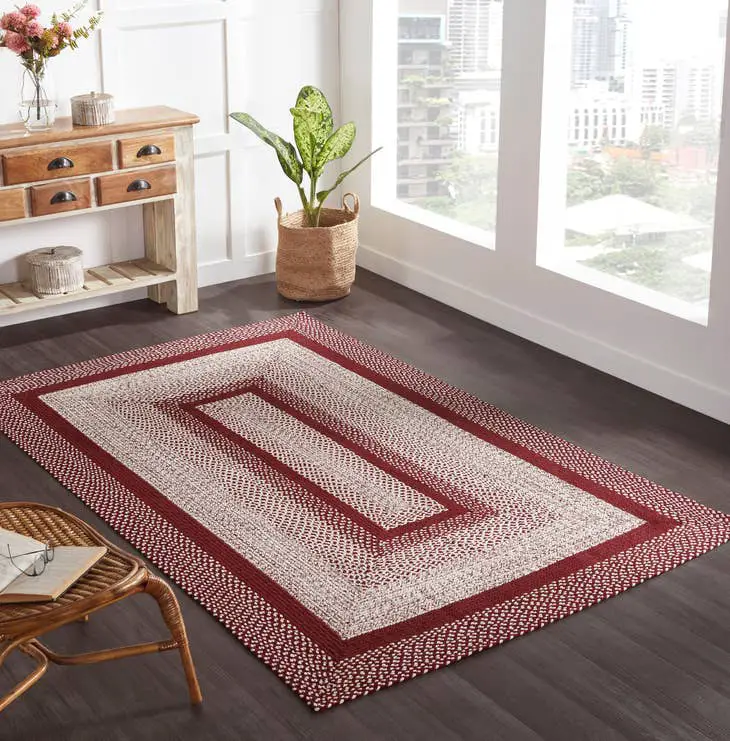
Rectangular rugs are the most versatile and forgiving shape for corner bed rooms. They align naturally with the geometry of the bed and room walls, work well in all five placement methods, and are available in the widest range of sizes. For Methods 1, 2, and 3, a rectangular rug is almost always the right choice.
The only decision is whether to orient it with the long side parallel or perpendicular to the bed in a corner placement, perpendicular (Method 1) is usually the stronger visual choice.
Round Rugs
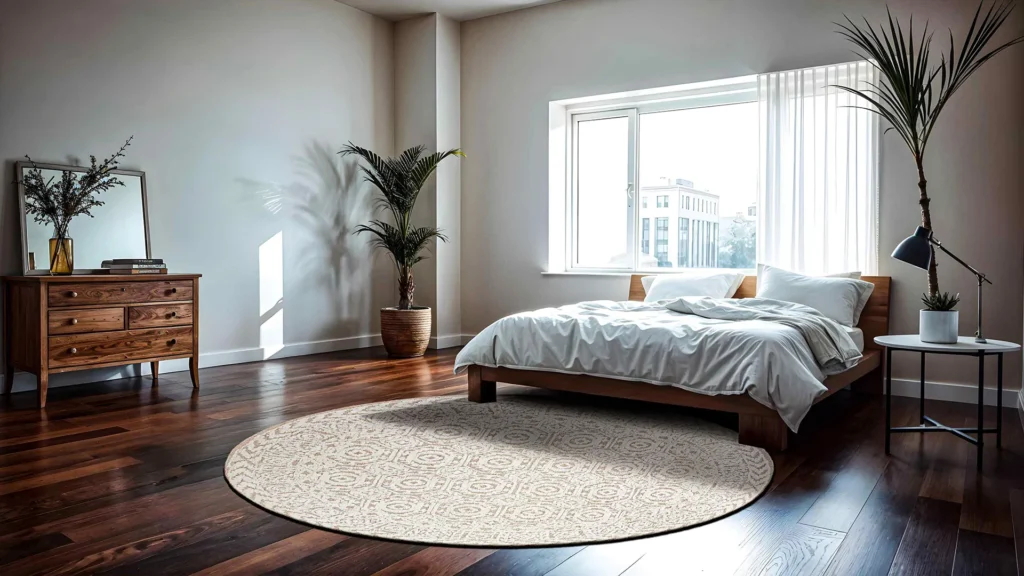
Round rugs work surprisingly well in corner bed rooms particularly in small rooms where their soft shape counterbalances the rigid corner geometry of the bed arrangement. Placed in the open floor space beside and in front of the corner bed, a round rug softens the room without the visual weight of a large rectangle.
For rooms with predominantly angular furniture and architectural features, a round rug introduces a welcome visual contrast. Choose a size with a diameter at least equal to the width of the bed’s open side for proportional balance.
Runners
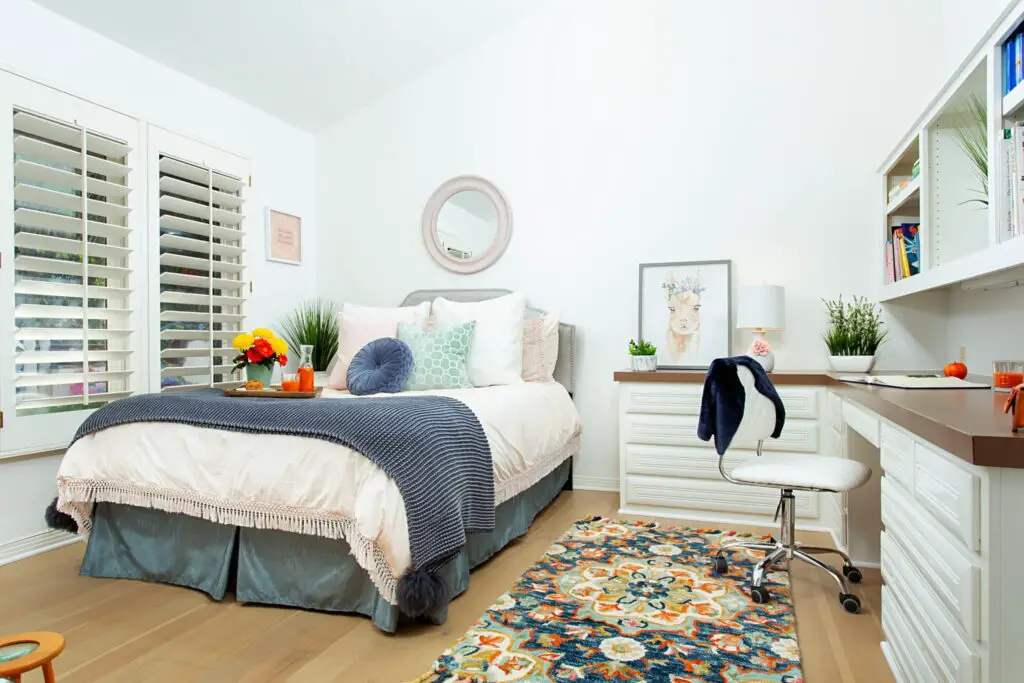
As covered in Method 5, runners are a practical and effective solution for corner beds, particularly in small rooms. A well-chosen runner along the open side of the bed provides exactly where soft flooring is needed without overwhelming the limited visible floor space.
Runners also work well in a layering context placed over a flat-weave or sisal rug, a runner adds texture, colour, and the layered aesthetic that is currently one of the dominant influences in bedroom interior design.
Square Rugs
Square rugs require more careful handling in corner bed rooms. Their equal dimensions can feel at odds with the rectangular geometry of both the bed and the room itself.
If using a square rug, place it using Method 1 (perpendicular) and ensure it is generous in size at least large enough that the bed can rest its foot section on the rug with visible rug extending on both the open long side and the foot. A square rug that is too small in this placement will look like an island in the floor rather than an anchoring element.
Corner Bed Rug Placement: Small Rooms vs Large Rooms
Small Bedrooms
In a small bedroom, a corner bed placement is often chosen specifically to free up floor space pushing the bed into the corner maximises the open area for movement. The rug strategy should work with this intention, not against it.
- Best methods for small rooms: Method 3 (adjacent rug) or Method 5 (runner) are most effective. They provide soft flooring where you need it without overwhelming the limited visible floor.
- Size discipline: Resist the temptation to fill the room with a large rug. In a small room, a rug that covers more than two-thirds of the visible floor area will make the space feel smaller, not larger.
- Colour strategy: In small rooms, choose a rug in a light or neutral tone that reflects light and visually expands the space. A dark or heavily patterned rug in a small corner bed room will advance the walls and make the room feel compressed.
- Avoid: Method 2 (large centred rug) in small rooms. A rug large enough to go beneath a corner bed will nearly fill a small room’s visible floor, creating a claustrophobic effect rather than an anchored one.
Large Bedrooms
A large bedroom with a corner bed has the floor space to use any of the five placement methods confidently. The main risk in large rooms is not making the rug too big it is making it too small.
A small rug in a large room with a corner bed looks like an afterthought. The rug should be proportional to the room, not just the bed.
- Best methods for large rooms: Method 2 (large centred rug) and Method 1 (perpendicular) both work beautifully in large rooms and create the grounded, luxurious aesthetic that a spacious bedroom deserves.
- Consider zoning: In a large bedroom, a second rug in a seating area or reading corner creates a room-within-a-room effect that makes the large space feel intentionally organised rather than sparsely furnished.
- Layering opportunity: Large rooms are ideal for the layered rug approach a large flat-weave or jute base rug covered partially by a more decorative rug creates visual depth and the collected, curated aesthetic that is difficult to achieve in smaller rooms.
Related Topic: Subfloor Preparation Carpet: Expert Subfloor Preparation
Layering Rugs in a Corner Bed Bedroom
Rug layering placing one rug on top of another of a different size, texture, or material has become one of the most popular bedroom design techniques, and it works particularly well in corner bed rooms where a single rug placement can feel limiting.
- Base layer: A large, flat-weave, jute, sisal, or natural fibre rug in a neutral tone. This provides the grounding layer that anchors the room and defines the sleeping zone. It can extend beneath the corner bed or cover the open floor area either works as a base.
- Top layer: A smaller, more decorative rug placed on top of the base positioned where you step out of bed or in the open floor zone beside the bed. The top rug should be noticeably smaller than the base and in a contrasting texture, pattern, or tone.
- Contrast principles: Layer a patterned rug over a plain base, or a plush pile rug over a flat-weave. Contrast in texture is more important than contrast in colour two similarly toned rugs of different textures layer more elegantly than two clashing patterns.
- Corner bed specific tip: In a corner bed room, the top layer rug works best placed adjacent to the open side of the bed exactly where you stand when getting up. This keeps it from looking centred in empty floor space and gives it a clear functional purpose within the layered composition.
6 Common Rug Placement Mistakes with Corner Beds
- Placing the rug parallel to the headboard wall: Running the rug in the same direction as the wall the headboard is against makes the room feel narrow and long. This is the single most common and damaging mistake in corner bed rug placement. Always consider perpendicular placement first.
- Choosing a rug that is too small: A small rug in a corner bed room looks accidental. It floats in the floor space without connecting to the bed and creates a disjointed, unanchored appearance. Size up consistently a too-large rug is far easier to live with than a too-small one.
- Centring the rug in the room rather than aligning it to the bed: The rug’s purpose in a bedroom is to anchor the bed, not to be centred in the room’s geometry. In a corner bed layout, these two things are often different. Always align the rug to the bed first, then consider the room’s proportions.
- Ignoring the traffic flow: The rug should cover the floor where you naturally walk the step-off area beside the bed and the path toward the door. A rug placed away from the natural traffic path serves no practical purpose and looks decoratively arbitrary.
- Using a round rug that is too small: A small round rug in a corner bed room looks like a bathmat. Round rugs in this context need to be generously sized at least 150 cm (5 ft) in diameter for a single or double, and 180–210 cm (6–7 ft) for a queen or king to have the visual weight needed to anchor the space.
- Forgetting a rug pad: On hard floors, a rug without a non-slip pad will shift position over time, particularly in a bedroom where regular foot traffic nudges it gradually. A rug pad also adds thickness underfoot and prevents the rug from wearing at the edges. Always use a pad sized approximately 2–5 cm (1–2 inches) smaller than the rug on each side.
FAQs
Can you have a rug with a bed in the corner?
Absolutely. And with the right placement, a corner bed can look just as well-anchored and styled as any standard layout. The key is understanding that the standard central-under-bed placement does not work for corner beds, and choosing one of the five methods specifically suited to this layout: perpendicular placement, large centred rug, adjacent rug, diagonal placement, or runners.
What is the best rug placement for a corner bed?
For most rooms, the perpendicular placement (Method 1) is the strongest choice. The rug runs perpendicular to the headboard wall, extending outward from the open long side of the bed into the room. This opens the room visually, prevents the narrow-room effect of parallel placement, and provides soft flooring exactly where you step out of bed. It is the placement most consistently recommended by interior designers for corner bed arrangements.
What size rug do I need for a corner bed?
Size depends on both your bed size and your chosen placement method. For a queen corner bed using perpendicular placement, a 200×290 cm (8×10 ft) rug is the standard recommendation, extending at least 45 cm (18 inches) beyond the foot of the bed and along the open long side. For a king, go to 230×300 cm (9×12 ft) or larger. For a runner beside a corner bed, 60–80 cm wide and long enough to run the full length of the bed’s open side is ideal.
Should a rug go under a corner bed?
It depends on the room size and the placement method. In a large room, a rug large enough to extend beneath the corner bed and out into the open floor space creates a luxurious, grounded look (Method 2). In a small room, keeping the rug entirely in the open floor space beside the bed (Method 3) often looks cleaner and feels less overwhelming. Both approaches work — the decision comes down to room size, budget, and the visual effect you want to achieve.
Final Thoughts
A bedroom with a bed in the corner is not a decorating problem it is a design opportunity that requires slightly more thought than a standard layout. The myth that you cannot have a rug with a corner bed is simply wrong. What you cannot do is apply the standard centre-under-bed formula and expect it to work.
Choose your placement method based on your room size, your bed size, and the visual effect you want to achieve. Size the rug generously.
Align it to the bed, not the room’s centre. Make sure it covers the floor where you actually walk. Do those four things, and your corner bed bedroom rug will look every bit as considered and beautiful as any conventionally arranged room.